Why Are Ragdoll Cats Called 'Puppy Cats'?
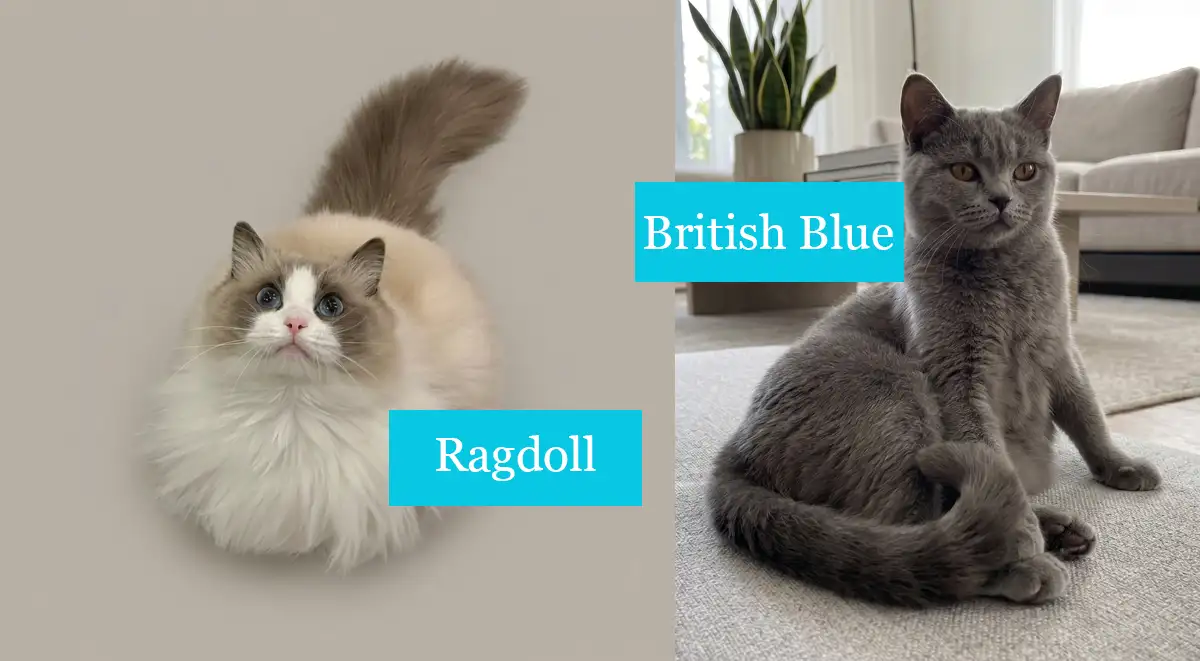
The “puppy cat” nickname makes many prospective owners curious about Ragdolls.
I have raised Bella, a British Shorthair, not a Ragdoll. This is a summary of breed descriptions and care guidance, not a Ragdoll diary.
A comparison can help frame questions, but it cannot predict which individual will fit your home.
The Ragdoll’s Core Personality: A Gentle, Affectionate “Puppy-Like Cat”
GCCF describes Ragdolls as generally gentle and sociable. That is a broad breed description, not a safety guarantee.
A Ragdoll can feel pain, fear or frustration and may scratch or bite. Never let children squeeze or pull a cat’s fur; supervise contact and let the cat leave.
Some greet visitors; others hide or need time to adjust. Neither response makes a cat a poor example of its breed.
“Best family cat” is a preference, not a scientific ranking. There is no validated intelligence league table showing that Ragdolls understand owners’ emotions better than other cats.
Ragdoll Cats’ “Dog-Like” Behaviours
The nickname usually refers to possible social and trainable behaviours, not to a dog-like set of needs every Ragdoll will have.
1. The “Little Sidekick” Nature
Some owners describe a cat that follows them between rooms or settles nearby. Others prefer more distance. The nickname is not a promise of constant company.
2. Learn Commands Like Puppies
Some cats learn recall or fetching through patient, reward-based practice. This is not unique to Ragdolls, and responding to a name does not mean a cat will come every time.
3. Enjoy Going Out for Walks
A Ragdoll is not automatically comfortable on a lead. Consider the individual cat’s reactions and a safe environment; do not put on a harness and assume a walk will be stress-free. Indoor play is also a valid way to provide activity.
4. Strong Social Needs
Ragdolls need daily care and opportunities for interaction, like other cats. I found no evidence for a universal two-to-three-hour quota. Arrange company and play around the individual cat’s needs, and seek advice for persistent distress when left alone.
Why Some Families Enjoy Living with a Ragdoll
A sociable individual may enjoy family life, provided its boundaries are respected.
Children and older people. Gentle handling and supervision matter more than a breed label.
Vocalisation. Some have quiet voices, but no cat can be promised never to disturb the household.
Coat and handling. The semi-long coat needs regular care. Being soft and fluffy does not mean a cat always wants to be picked up.
The “cuddly stuffed animal” comparison misses an important point: a cat is a living individual that must be free to end contact.
Ragdoll vs. British Shorthair (British Blue): Key Differences
I have lived with Bella, not a Ragdoll. The comparison below separates a care difference from a nickname that may or may not fit the cat you meet.
| Question to ask | Ragdoll | British Shorthair (British Blue) |
|---|---|---|
| What coat care can I manage? | Semi-long coat: plan regular combing and mat checks. | Short, dense coat: brush as needed, especially during shedding. |
| Will this cat seek close contact? | A sociable breed description is a starting point; ask about the individual. | Bella enjoys some nearby company but chooses when to be touched. |
| Can the cat learn games or cues? | Possible with voluntary, reward-based practice. | Possible too; Bella’s response to her name is not a breed test. |
| Is a walk necessary? | No; only consider a harness if the individual tolerates it. | No; provide suitable indoor play as well. |
Which One Should You Choose?
Meet the cat and ask how it handles visitors, play, grooming and time alone. If you want a highly interactive companion, check that the individual seeks contact; if you want a quiet one, do not assume Bella’s habits describe every British Shorthair. Either cat needs daily care and a place to retreat.
Final Thoughts
If you enjoy interactive companionship, a Ragdoll may appeal to you. Meet the cat and ask about its history and preferences.
Bella has taught me to value quiet company too, but a British Shorthair still needs time and care. Neither breed is a foolproof choice for a particular lifestyle.
The nickname explains why some people are drawn to Ragdolls. The care questions above matter more when deciding whether one belongs in your home.